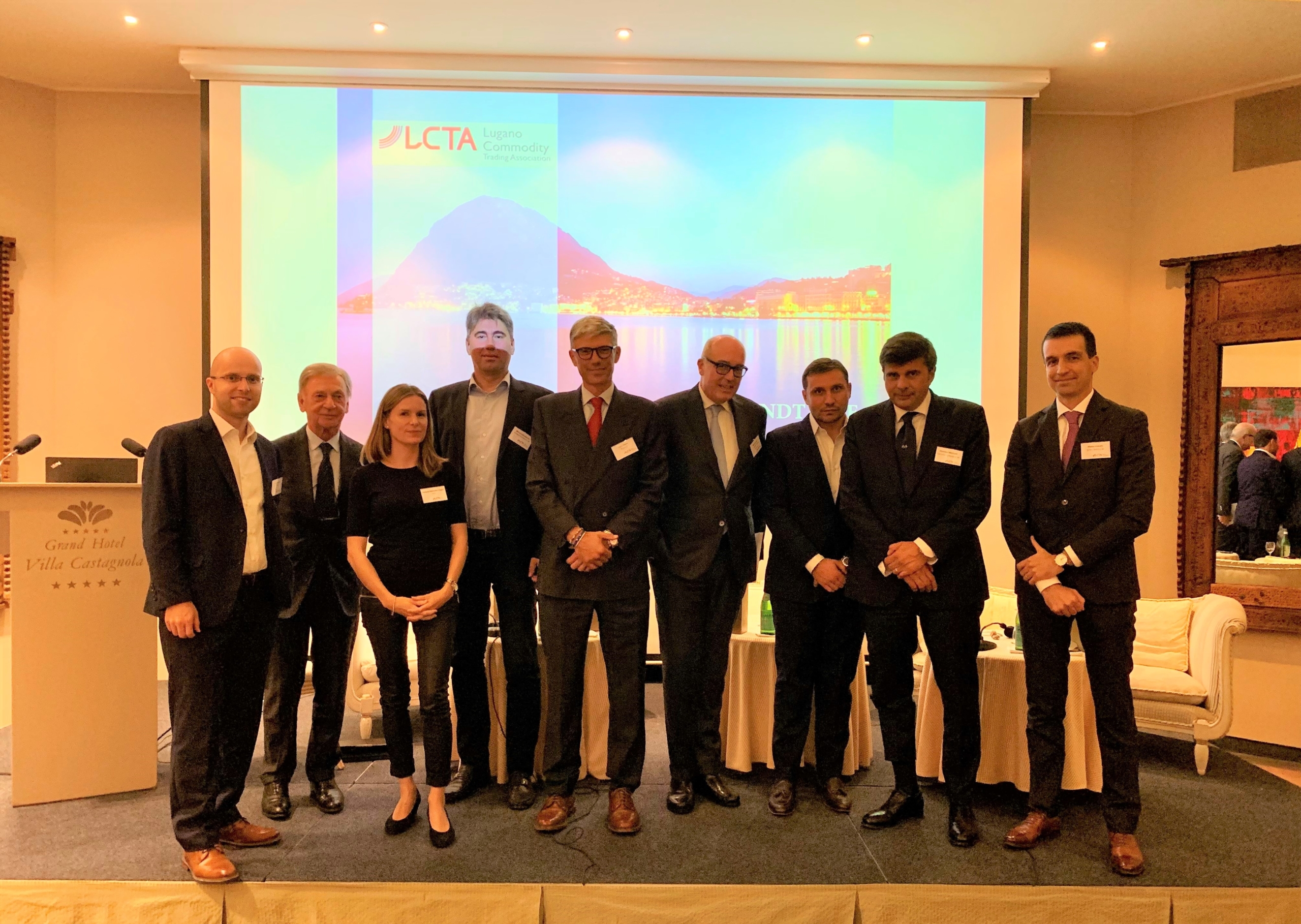
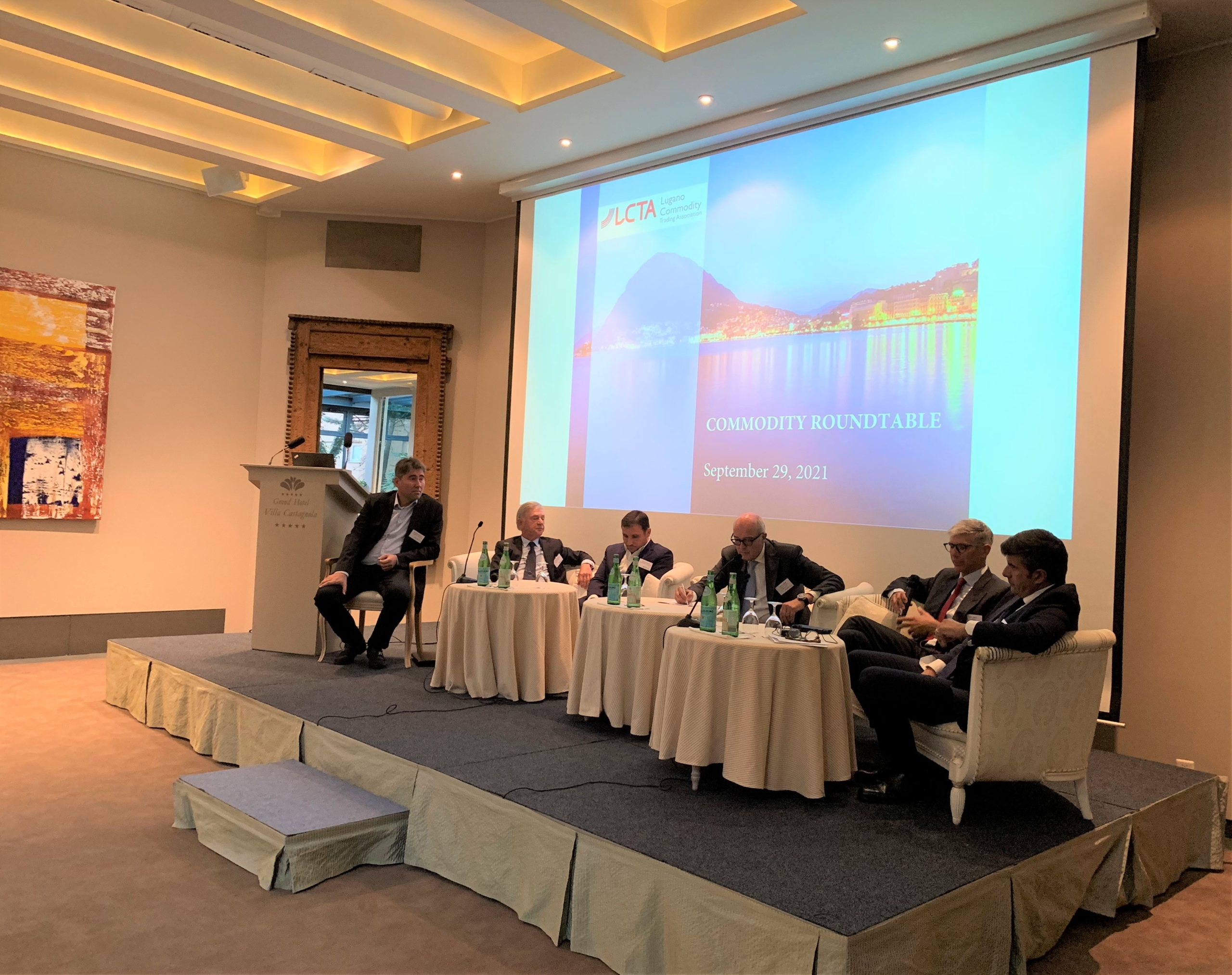
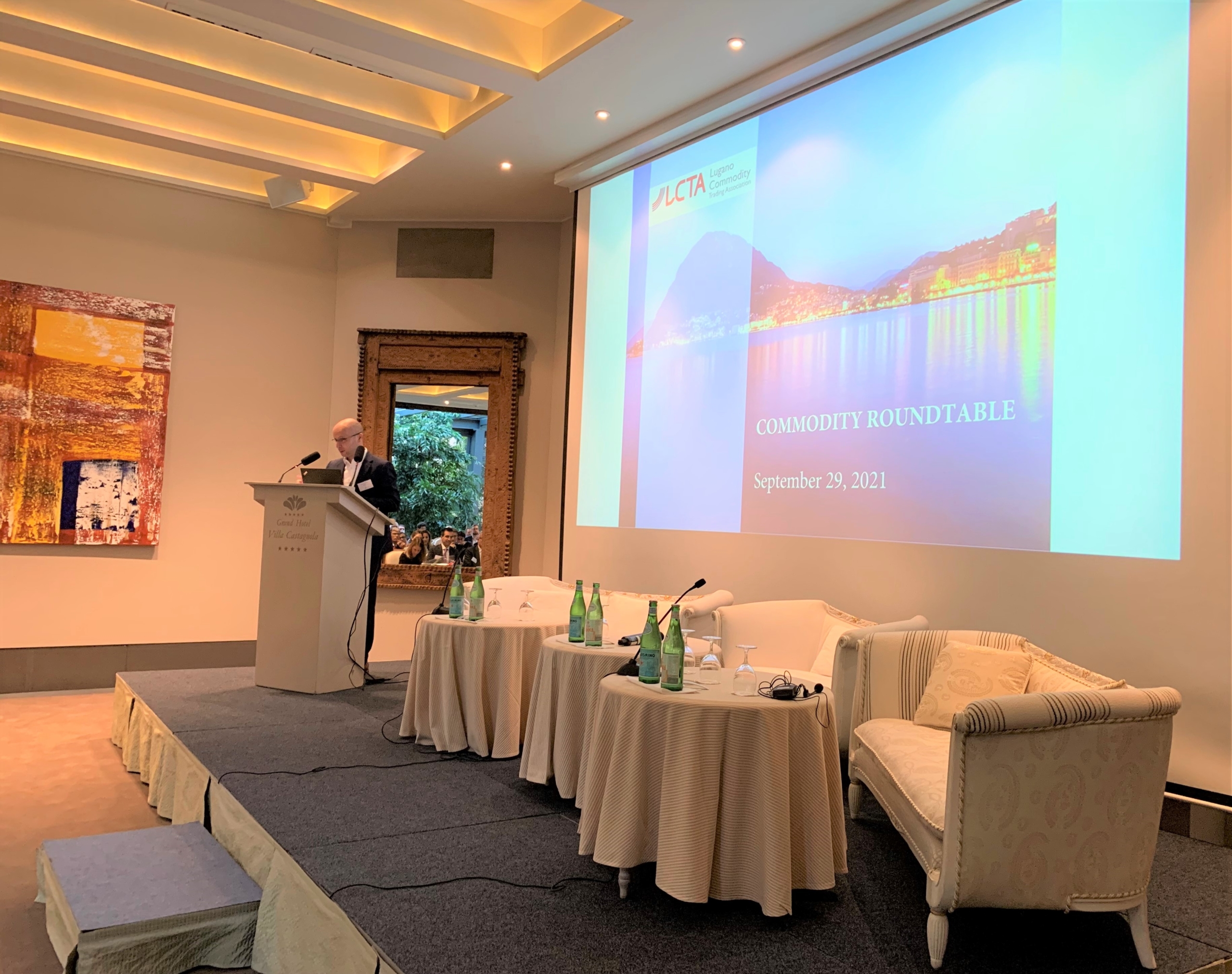
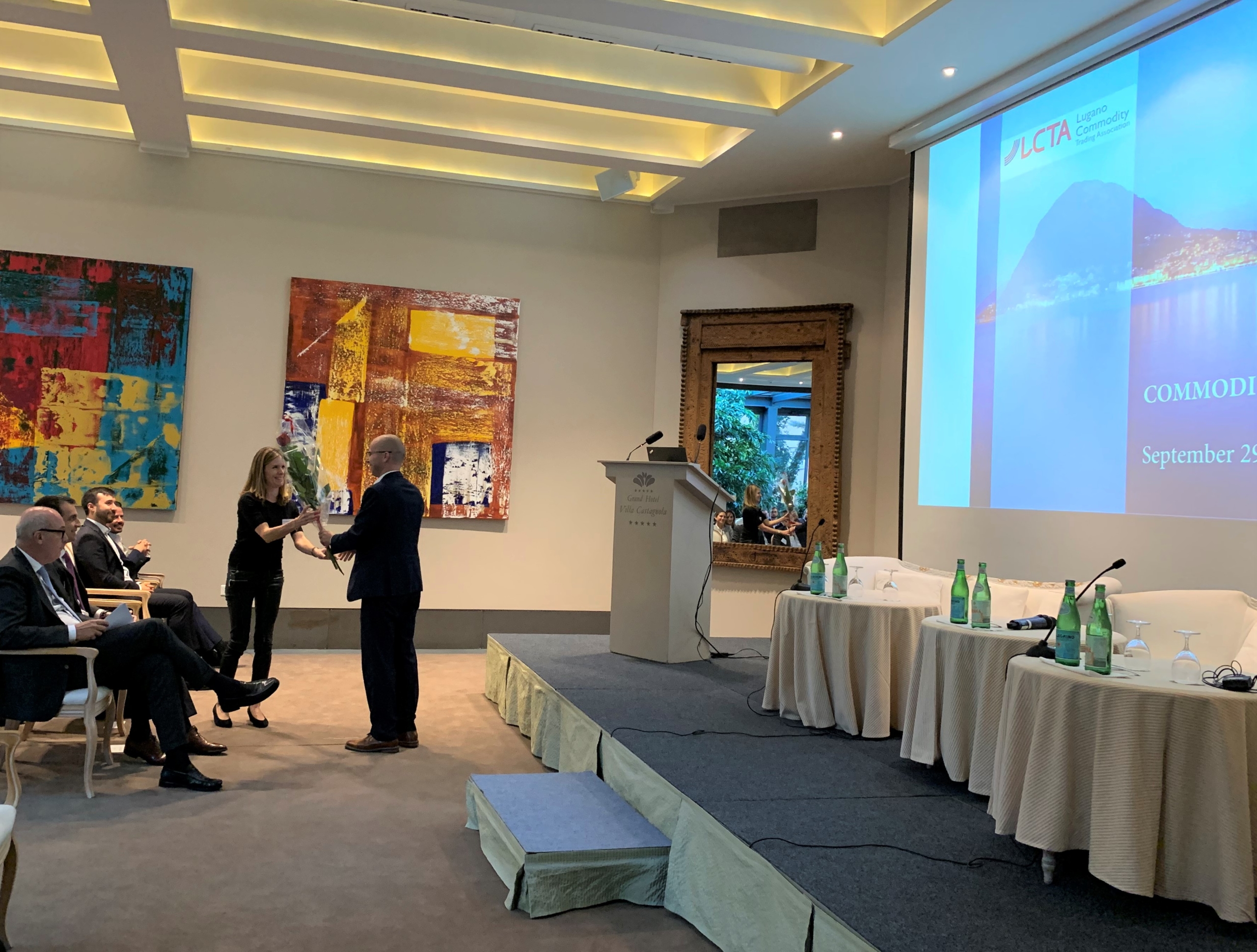
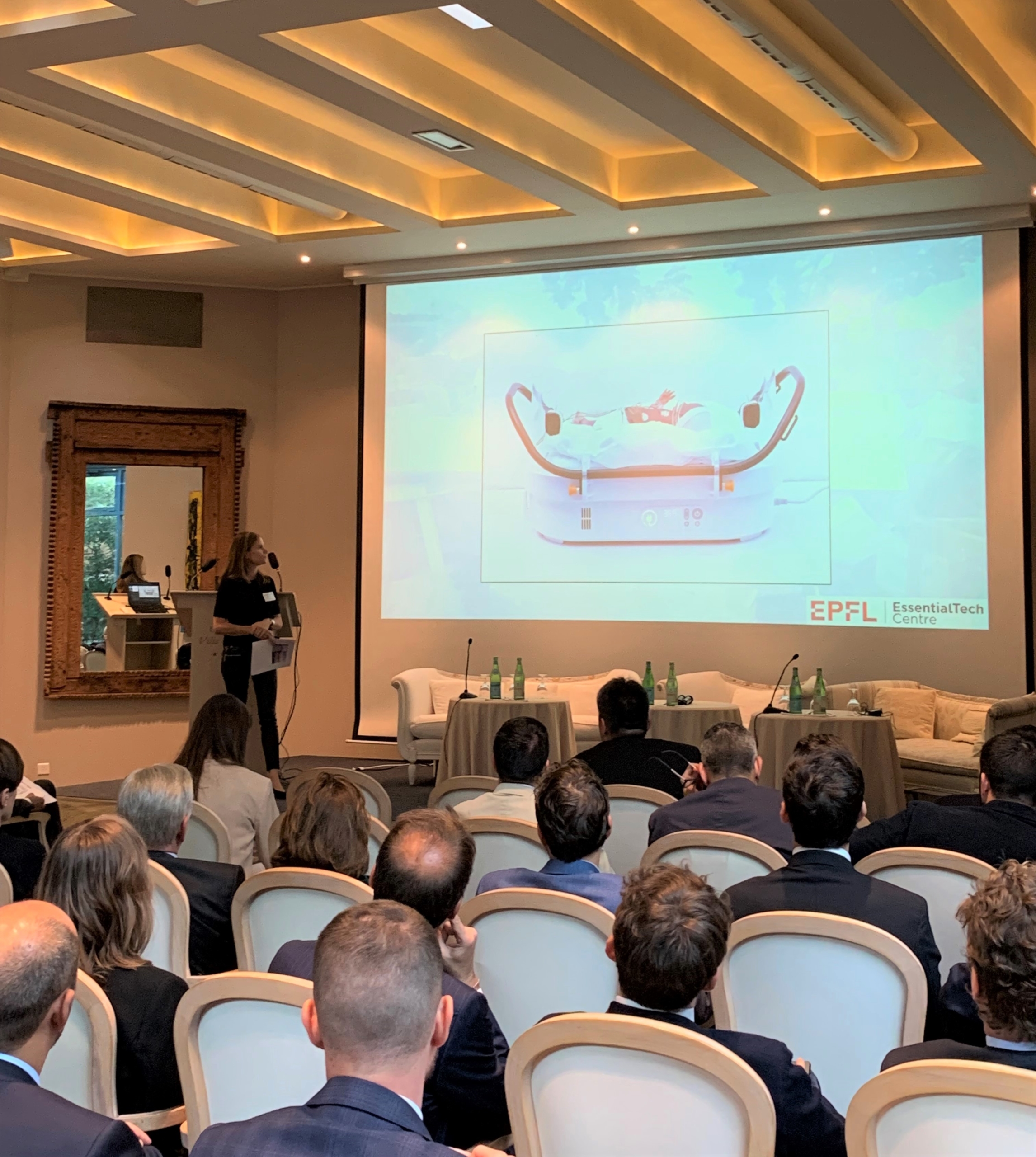
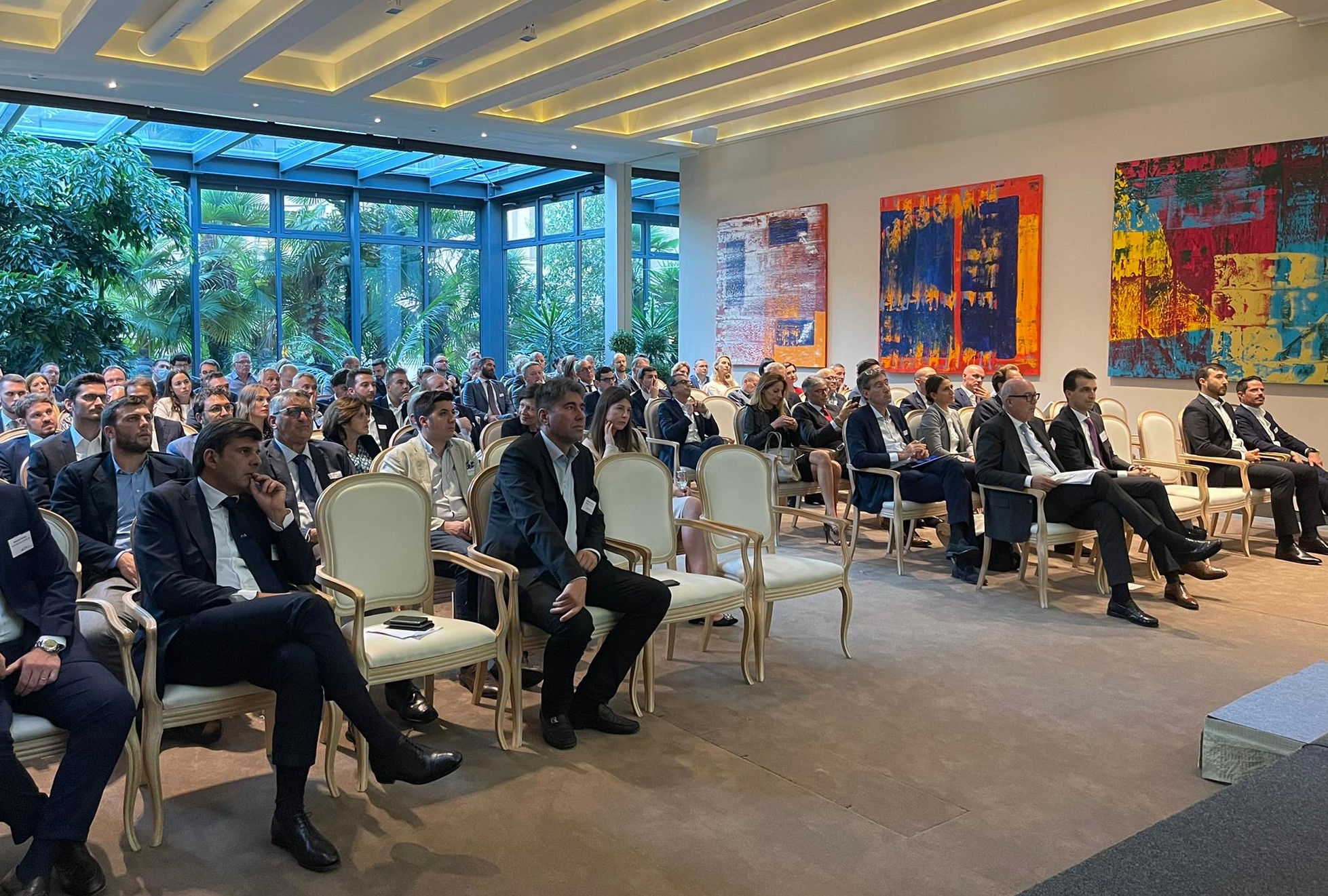
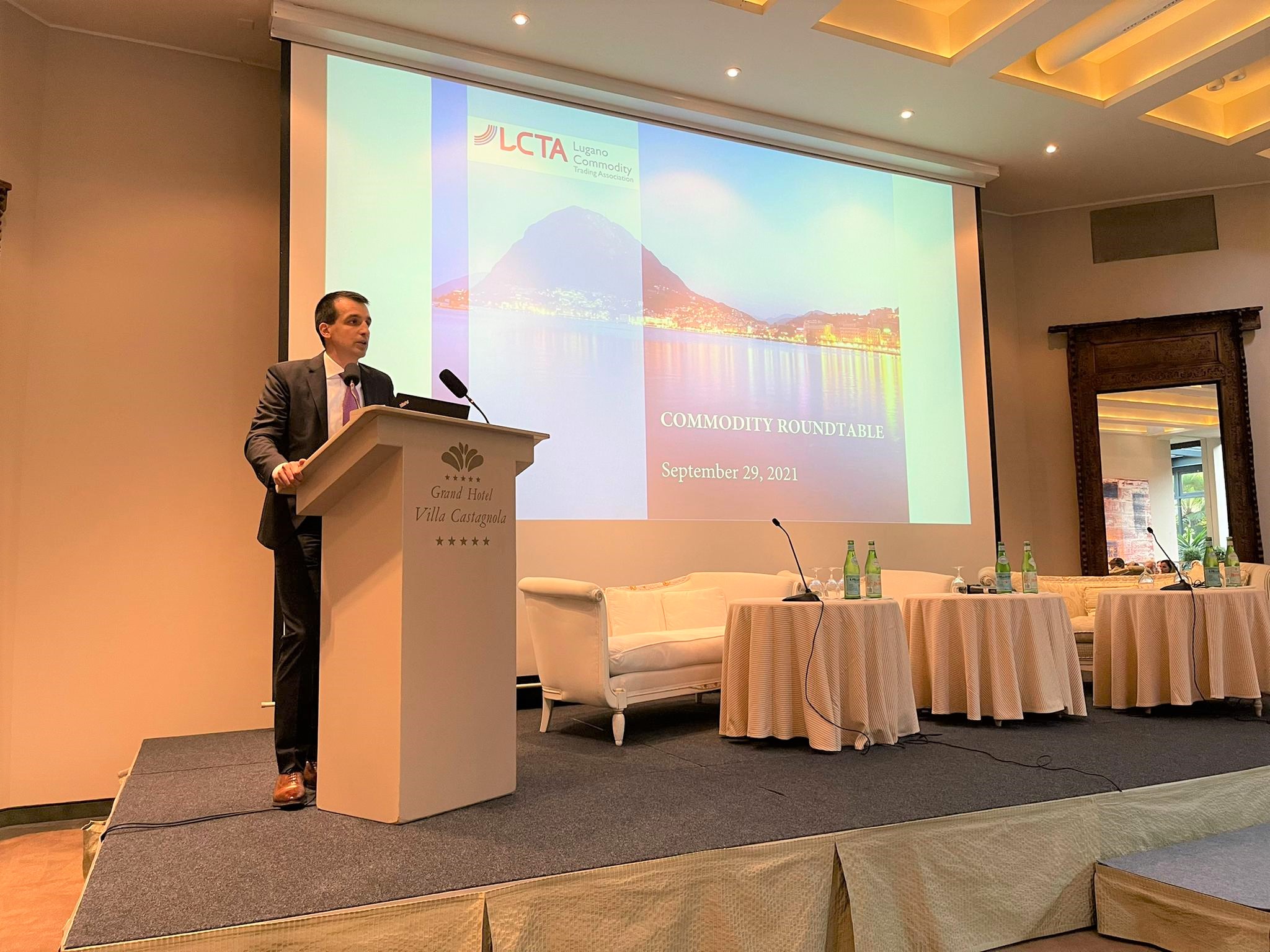
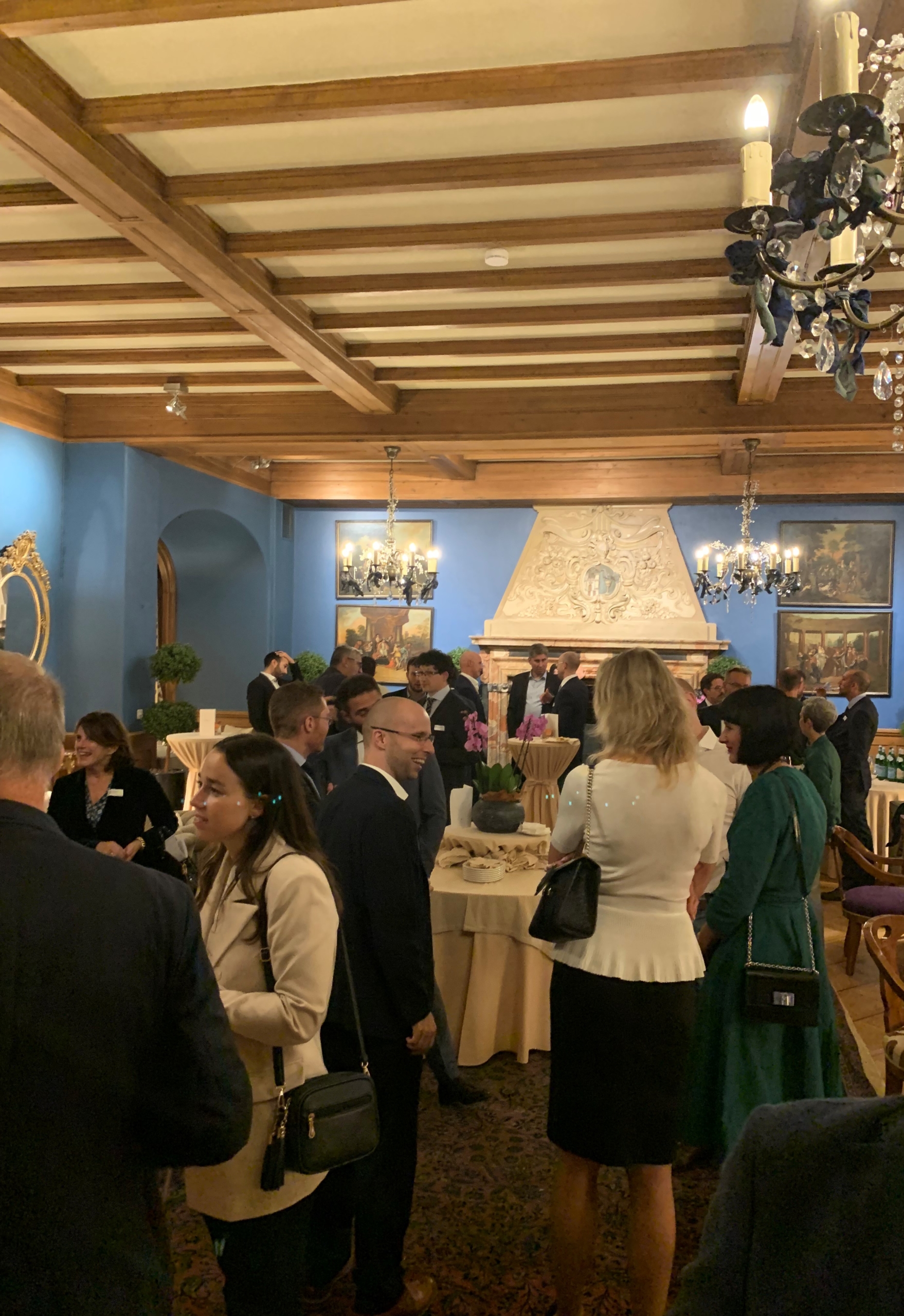
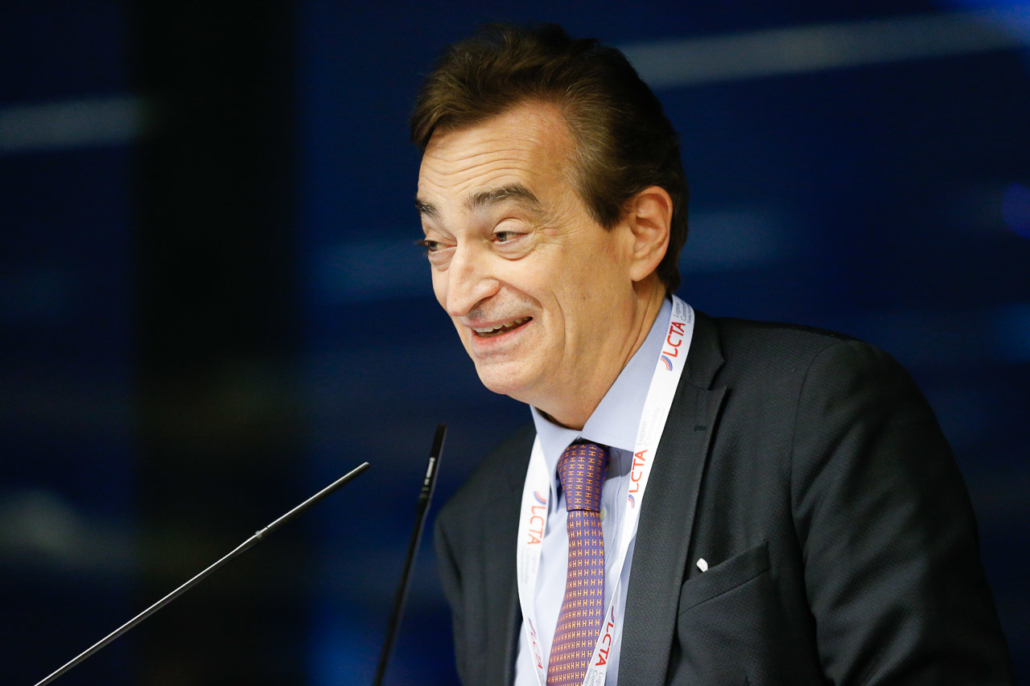
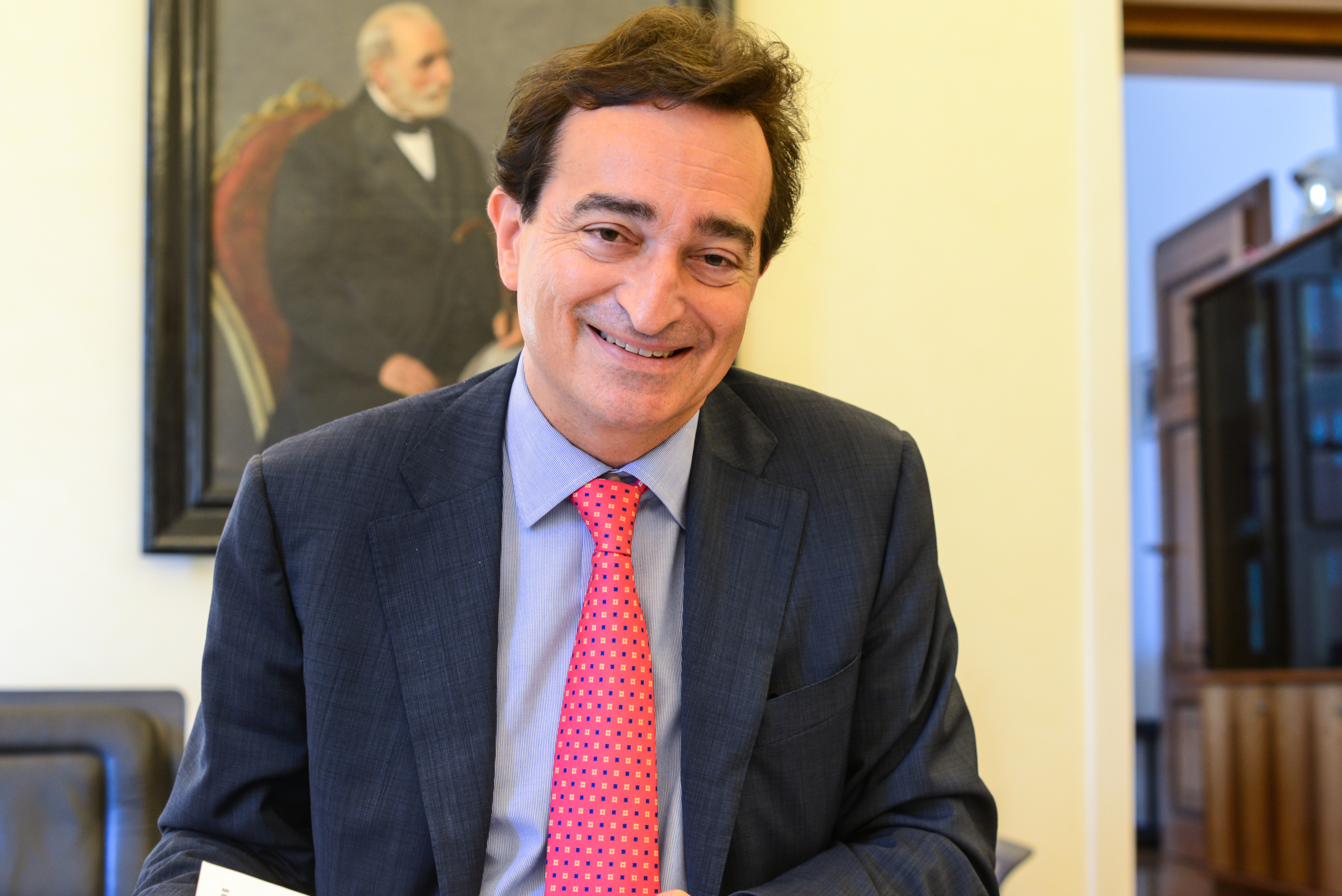
“Commodity Rountable” organized by LCTA took place on September 29, 2021, in Lugano.
President Matteo Somaini and Secretary General Marco Passalia gave a warm and enthusiastic welcome to all participants.
Great networking opportunity (with covid pass) during the apero and unique occasion to have a market overview from CEOs active in different commodity branches.
Also thank to the moderation of LCTA’s Vice President, Roberto Grassi, the event was dynamic and interesting. At the same time speakers were able to give real and pragmatic points of view about commodity markets. Our speakers were: Carlo Ghezzi, CEO, Gurta AG; Giovanni Marchelli, CEO, Coeclerici Compagnie SA; Vincenzo Romeo, CEO, Nova Marine Carriers SA; Murat Seitnepesov, CEO, Integral Petroleum SA; Norbert Stadler, CEO, DSS International SA.
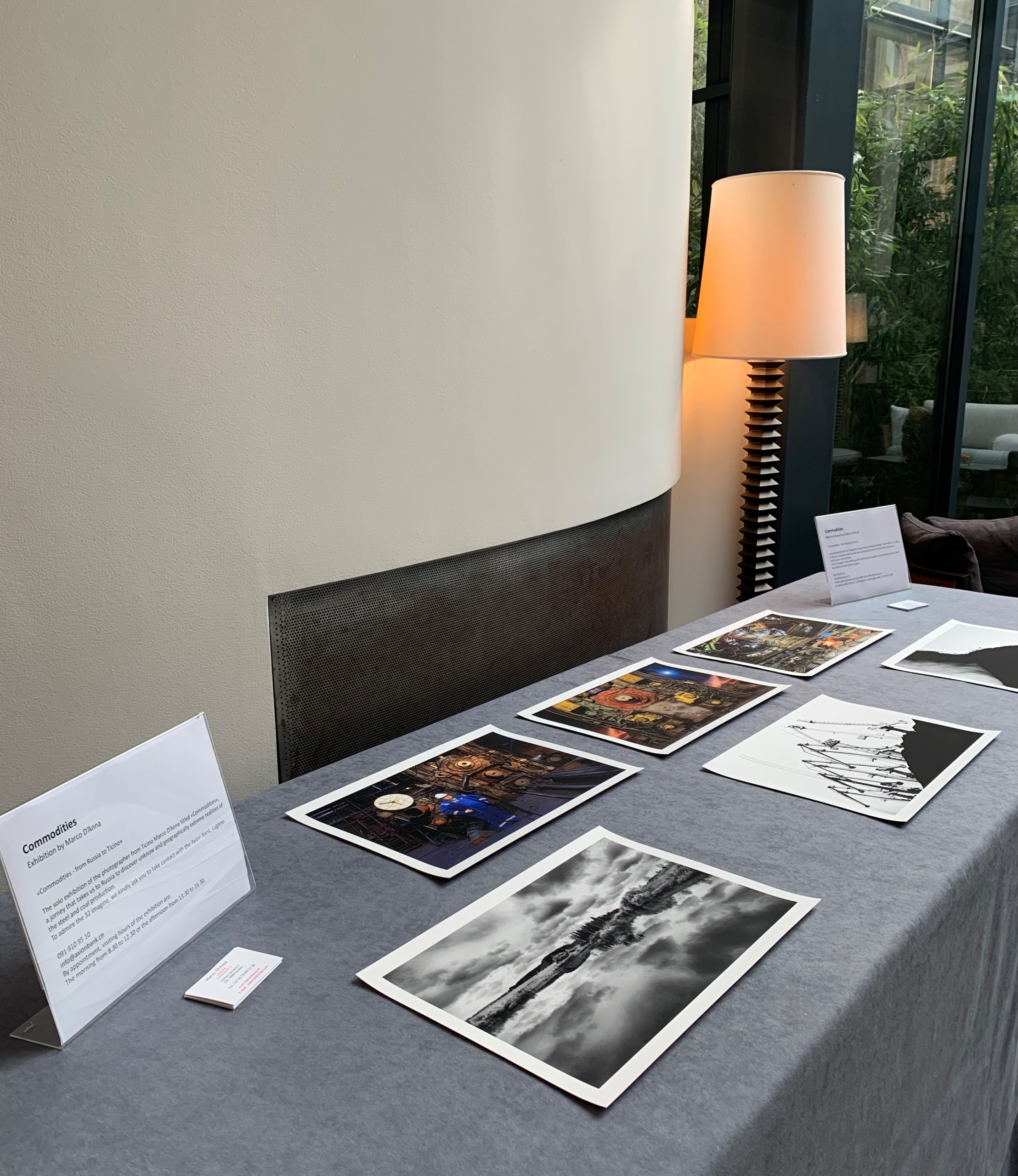
During the evening there was also a very interesting presentation of Nathalie Morandini Siegrist, Special Projects Manager, EssentialTech Centre, EPFL. Moreover, the photographer Marco d’Anna showed his artistic photos representing steel production and mining production.
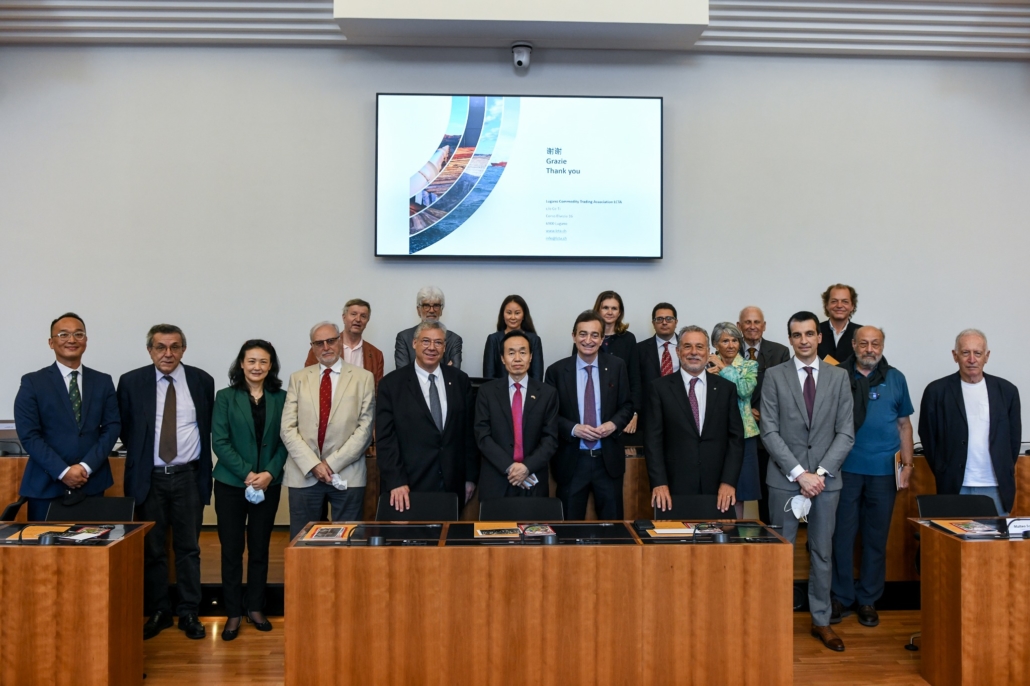
On the occasion of the official visit to the City of Lugano of H.E. Wang Shihting, Ambassador of the People’s Republic of China in Switzerland, the President of the Lugano Commodity Trading Association (LCTA) Matteo Somaini had the opportunity to present the commodity trading sector active in Lugano, listing also the various commodities traded with China.
This exchange has made it possible to create long-lasting professional ties and important collaboration.
https://www.lcta.ch/site/wp-content/uploads/2021/07/WhatsApp-Image-2021-07-28-at-17.01.22.jpeg13652048LCTA Editorhttps://www.lcta.ch/site/wp-content/uploads/2024/05/LCTA-Logo-2024-r02-01.pngLCTA Editor2021-08-13 09:20:002022-08-19 11:17:52Visit from the Chinese Ambassador in Switzerland to Lugano
Marco Borradori’s sudden departure leaves us speechless. A Mayor always available, open and interested. The LCTA would like to thank Mayor Marco Borradori for his important work in these years for Lugano and the business community. His dedication to the city and commitment to continuous improvement will remain in our memories.
https://www.lcta.ch/site/wp-content/uploads/2021/08/GCC-2019-11-13-116-1-1030x686-1.jpg6861030LCTA Editorhttps://www.lcta.ch/site/wp-content/uploads/2024/05/LCTA-Logo-2024-r02-01.pngLCTA Editor2021-08-12 10:41:002021-08-31 10:24:40LCTA remembers Mayor Marco Borradori with deep gratitude
“Ever Given” or better “Never Get” indemnities for the delay in the global trade?
A few weeks ago everyone was talking about a giant of the seas carrying approximately 18’000 TEU, blocking hundreds of ships from traversing the Suez Canal, leaving (not only) the insurance market breathless and disrupting the world trade. A tremendous number of companies, various industries, ports and infrastructure across the globe are directly or indirectly affected by that event and therefore suffers financial losses.
What’s happened?
The “Ever Given” (about 400 meters in length, roughly the height of the Empire State Building) was caught in a sandstorm while crossing the Suez Canal, the crew was unable to steer the ship which deviates and stuck into the border of the Suez Canal.
Who is responsible?
Two SCA (Suez Canal Authority) official maritime pilots were on board at the time of the incident. They were in charge to command the ship, taking over from the regular crew and the captain. Independent experts argue that their role is often a mere presence and the captain has the final responsibility. The Egyptians authorities are supporting obviously this understanding of the facts; the ship-owner is blaming obviously the sandstorm. Independent observers might suggest a combination of the causes. By the way . . . the Suez Canal’s own policies suggest it’s not to blame, even if its pilots were at the helm of a ship that ran aground.
The rescue
The 224,000-ton vessel, immobilized on March 23 within the Suez Canal was dislodged on March 29 by the force of several rescue teams with 14 tugboats and multiple dredgers at high tide. On Apr. 13, the “Ever Given” has been immobilized again: this time however by the chains of the Egyptian justice. It was seized by a court in Ismailia after a request of the SCA for compensations estimated initially at USD 916m, including lost revenue for the canal, USD 300m for the salvage (equipment plus 800 people that worked to free the ship) and USD 300m for loss of reputation. The Egyptian State did not say who would be responsible for paying the USD 916m in damages.
Currently the Egyptian Court rejected the request for release the “Ever Given” from arrest; it’s therefore still kept in the Great Bitter Lakes; additionally Egypt has reduced on May 8 its USD 916m compensation claim for the grounding of the Ever Given to USD 600m and then (May 26) to USD 550m. The SCA reduced the value of the required compensation by 40 % after they obtained the estimated financial value of the goods on the ship.
The rescue story is now over. The story for the Legal and Insurance Implications just started.
Damage mapping There are different insurance sectors that are impacted such as
Hull & Machinery (H&M)
Marine & Cargo and
Protection & Indemnity (P&I)
The Hull insurance covers the damage to the ship itself. These losses should be manageable. The Cargo insurance in place for at least a part of the 18’000 TEU (probably affecting thousands of insurance policies) provides coverage against physical losses and/or damage for the goods being shipped. Information’s received at IBC through own clients indicated that the ship had power at any time and the cooling system for the perishable goods operated properly. Damage to goods on the other 360 blocked ships (including 41 bulk carriers and 24 crude oil tankers) should also be considered. The Protection & Indemnity insurance provides protection to the ship owner/operator should their negligence cause damages to others (this might include claims against the ship’s owner from e.g., the SCA for possible damage to the canal and for loss of revenues, and separately claims for compensation from some of the owners of the delayed ships). In short: the canal blockage will trigger a flood of indemnity requests by everyone affected. The salvage company which usually work on a so-called Lloyd’s Open Form basis and will claim a success fee based on the value of the ship and cargo; the Suez Canal Authority; the shipping industry; the charterers; the owners of the goods; the other 360 ships stuck in the traffic jam, etc. The insurers for cargo on board will in turn file claims against ship owners, who will turn to their insurers for protection.
The ship-owner of the “Ever Given” declared on Apr. 1 “General Average” following the work to re-float the vessel. The declaration of a General Average means that shippers will be required “to share the relevant expenses incurred in ship rescue”. The General Average terms are outlined in the shipment’s bill of lading and are covering a pretty long list of expenses, which include towing and salvors. Lost revenue for the canal, however, would probably not fall under general average declaration. The goal of this incredibly complex process is to share the costs of a ship’s rescue among all stakeholders. The mandated adjuster RHL (Richard Hogg Lindley) will determine now how much the shippers will have to pay. Currently RHL is getting in touch with all of the shippers that had cargo on board to obtain guarantee bonds from the insurance industry. If the cargo interests decided no not to buy an insurance coverage – although it’s a relatively cheap insurance – then a cash deposit is requested by RHL.
Even if the period of time that the canal was blocked was relatively short, it’s beyond any doubt that the mayor concern will be around the coverage for delayed cargo. We are not speaking about shipping delays of everyday items for customers around the world like garden gnomes – which are in short supply in England – or about flower pots, barbeques and garden furniture in short supply in Switzerland. We are speaking about container ships and tankers which were not in the position to deliver on time food, fuel, commodities, pharmaceutical raw materials and industrial goods to Europe. The same applies the other way round for goods from Europe to the Far East. The impact ranges from infrastructure projects to essential spare parts for the proper working of the industry. Not to speak about the 18’000 TEU which timely availability is compulsively necessary for the shipment of further goods.
Losses due to delays
The crucial point is that most of the cargo policies exclude coverage and therefore an indemnity for losses due to delays. Effectively specific marine insurance policies for delay to cargo are in place however usually for vessel shipping perishable goods such as fruit. Generally, for non-perishable cargo a delay insurance is not bought.
Most of the marine cargo insurance policies adopt the ICC (Institute Cargo Clauses), English law and practice is therefore applicable (e.g., the terms of the UK Marine Insurance Act 1906). These policies require “physical loss or damage” to trigger coverage. The ICC “A” excludes delay. Also, according to the Swiss General Conditions of Marine Insurance on Goods (GCMI 2006) States that the insurer is not liable for the consequences of seizure, confiscation or temporary seizure (quarantine) by government authority or power as well as delay, howsoever caused, in transit or delivery.
Cargo owners of non-perishable goods normally renounce to an expensive coverage for delays. The “Ever Given” case sets a precedent. It should be considered as an alarm bell. The current approach of ship-owners and operators should be seriously reconsidered. Risk Managers across all industries have to reconsider how to deal with such risks, at least partially not insurable and take appropriate actions. Beside additional marine clauses covering pure financial losses, other insurances like CBI (contingent business interruption coverages), TDI (Trade Disruption Insurance) or supply chain risk insurance coverages should be considered. It must be imperatively agreed that the insurance coverage will also be triggered by an event that is not limited to physical loss or damage. The focus has to be aligned on non-physical losses and on business interruption damages as a result of delay in the reception of goods.
On the “Ever Given” case there are objectively different liability situations with an incredible number of parties involved; at the end of the day everyone will try to recover from the party that is at fault.
Please contact the following IBC Insurance Broking and Consulting team members with any additional questions or to discuss further
https://www.lcta.ch/site/wp-content/uploads/2021/07/banner-homepage1.jpg680674LCTA Editorhttps://www.lcta.ch/site/wp-content/uploads/2024/05/LCTA-Logo-2024-r02-01.pngLCTA Editor2021-07-06 11:50:412021-07-06 14:27:39“Ever given or never get?”
A crisis is a moment of truth that tests a company’s readiness, resilience and response. Organisations can emerge stronger after their most testing moments. Are you prepared? Watch this video to get a flavour of what’s going on.
The coronavirus pandemic has created new challenges for businesses as they adapt to new operating models. Across all industries, companies are facing a period of greater uncertainty and growing threats from financial crime, disruptive technologies and other strategic risks. It is also clear that crises and reputational issues strike more quickly than ever before. This is amplified by social media and the ‘public information space’. The reputational, operational, legal and compliance implications could be considerable.
For most, a major crisis is a once-in-a-career event. As a consequence, it is easy to fall back on routine procedures, only worsening the outcome, or to improvise the wrong solutions out of fear and panic instead of following effective practices. But at a time when corporate reputations are under greater scrutiny, managing financial crime threats, strategic risks, and being ready and able to deal with crises and issues effectively when they happen are high priorities for many boards and senior executives.
The crisis lifecycle
Effective preparation needs to address the entire crisis management lifecycle – prevention, response and recovery. Each phase of this lifecycle can present an opportunity to protect the organisation from risks, costs and damage emanating from a crisis – and to strengthen the organisation’s defences in future.
Each phase answers a specific objective:
Be ready: prevent crisis, identify risks and prepare for the worst.
Know how to respond: analyse and respond to the crisis, while keeping the business running.
Recover fast: learn, recover and emerge stronger.
Each phase has a range of solutions, which need to be customised to prevent the avoidable and prepare for the truly unavoidable. Below are two Deloitte client stories with successful outcomes.
360° crisis prevention
A Swiss-based multinational corporation established best-in-class risk management procedures to prevent adverse events to the fullest extent possible. The project included the redesign of the enterprise risk management process, including assessing and defining the company’s risk appetite, conducting a risk assessment across all divisions and the re-design and implementation of a mitigating control framework.
Long-term efficiency in crisis response
A Swiss-headquartered multinational client had to respond to regulatory actions taken by a number of regulatory authorities in the wake of allegations of corrupt business practices. The allegations related to the securing of new business in several geographies, including the Middle East and Central Asia, and covered a period of over ten years. A comprehensive and broad investigation was conducted, including email and other document reviews, interviews and analysis of ERP systems in various international locations.
Conclusion
Crisis prevention is on the agenda of most executive committee meetings, but should perhaps be given extra attention in light of the growing threats and vulnerabilities stemming from the pandemic. In the midst of the third wave of the coronavirus and concerns about the longevity of the pandemic, companies should be proactive in addressing the threats, and plan ways to prevent crises rather than responding when they occur. This pandemic has taught us that preparation is key to successfully limiting risks. The ability to quickly react to unforeseen events helps reduce overall impact and prepares companies to better face the continuous increase of threats. Companies that were caught off guard will have to quickly assess their exposure to threats and prioritise initiatives to address their security gaps. The reality is that companies need to change their outlook from ‘if’ they get attacked, to ’when’, and recognise that the fallout can be financially and reputationally devastating, especially if customer data is involved. There are ways to reduce the likelihood and impact of threats, but it requires focused action and forward planning.
https://www.lcta.ch/site/wp-content/uploads/2021/06/photo-1544274821-217ea83e0015.jpg7001050LCTA Editorhttps://www.lcta.ch/site/wp-content/uploads/2024/05/LCTA-Logo-2024-r02-01.pngLCTA Editor2021-06-14 13:48:002021-06-16 15:15:48Risks and financial crime: How resilient is your company?
Article by Roy Grist and Yasser Muflahi, Squire Patton Boggs
It’s the end of the line for the London Interbank Offered Rate (LIBOR), the interest rate benchmark for many financial products since the 1980s. Sterling Overnight Index Average (SONIA), an alternative rate, will become the new benchmark of choice. Parties to contracts and their advisers will need to consider the implications of this for both new contracts and existing contracts reliant on LIBOR. What will the transition to SONIA look like and what do interested parties need to do now to prepare?
Background and LIBOR
LIBOR developed during the 1980s and originated from the need for a standard benchmark for interest rates across financial institutions. It is a measure of the average rate at which banks are willing to borrow wholesale unsecured funds and is calculated by using banks’ submissions of their inter-bank borrowing rates. Calculated on a daily basis and in five currencies, LIBOR is widely used as an interest rate benchmark and written in to an array of legal contracts and financial products.
In the period since 2008, when concerns emerged during the financial crisis about inter-bank lending rates such as LIBOR being artificially manipulated, many reforms to LIBOR have taken place and regulator scrutiny has increased. However, banks no longer fund themselves in the way they once did. This has meant that LIBOR is now sustained by the use of “expert judgement” rather than an underlying active market. The Bank of England and the Financial Conduct Authority (FCA) announced last year that LIBOR is “not considered sufficiently robust or sustainable given its widespread use”. As such, the publication of LIBOR rates is expected to cease after the end of this year.
SONIA and the transition from LIBOR
The Working Group on Sterling Risk-Free Reference Rates (RFRWG) was established by the Bank of England and the FCA in 2015 to oversee the transition in the UK to alternative benchmark rates for interest before the discontinuance of LIBOR. In 2017, the RFRWG selected SONIA as the preferred alternative to LIBOR for wholesale financial markets in the UK. SONIA is administered by the Bank of England and is based on actual transactions reported to it. It reflects the average of the interest rates that banks pay to borrow sterling overnight from other financial institutions.
SONIA is the preferred alternative to LIBOR because it is
Founded on active, liquid underlying markets and therefore is a more accurate measure of the general level of interest rates
Almost risk free, because it does not include any term bank credit risk or liquidity premium
Suitable for use in around 90% of future sterling lending by value
In order to facilitate the transition to SONIA, the FCA has secured the agreement of banks which will continue to fund LIBOR until the end of 2021. Reliance on LIBOR after this will cause a number of issues; most notably, uncertainty over the legal position of contracts that refer to LIBOR rates. The Bank of England and the FCA are keen to avoid the risk of disorderly outcomes as a result of agreements continuing to reference LIBOR, with no permanent fallback provisions. As such, they have encouraged all stakeholders to actively progress the transition where necessary. The scale of the project should not be underestimated. The Bank of England reported in 2018 that LIBOR underpinned $30tn of financial contracts in GBP markets alone.
The RFRWG published a roadmap back in January 2020, which sets out various milestones, which need to be achieved to enable a smooth transition and ensure stakeholders are fully prepared for the end of LIBOR. The roadmap has been updated a number of times since, with the most notable recent update being, from the end of March 2021, LIBOR should no longer be used in any contracts relating to financial products that mature after the end of 2021. This means any new contracts entered into now which incorporate a reference rate should include SONIA or any other non-LIBOR alternative reference rate.
Relevance
These developments are relevant to all financial products and contracts that reference LIBOR. This will include finance agreements, commodity related agreements and indeed many other types of contract which have arrangements for payments which add interest. It will not be appropriate to simply swap SONIA for LIBOR because the risk free SONIA rate will typically be lower. Replacement benchmarks may therefore be set at SONIA plus an agreed “spread” to reflect that difference.
What should businesses do now?
Businesses effected by the transition from LIBOR to SONIA, with the help of their legal advisers, will need to:
Identify LIBOR exposures and fallback terms (if any) within existing contracts and ensure they are adequate
Obtain advice on how the transition from LIBOR to SONIA should be managed, taking account of the fact that SONIA is not a like-for-like replacement for LIBOR
Update any impacted existing contracts accordingly with robust fallback language
Ensure that any new contracts which incorporate a reference rate for the payment of interest do not reference LIBOR, but instead reference SONIA or another appropriate non-LIBOR alternative
Businesses should be taking action now to ensure that the end of LIBOR does not mean uncertainty about future obligations or entitlements to interest. Consider what contracts and which counterparties this is relevant to and seek advice on what might need to be done.
https://www.lcta.ch/site/wp-content/uploads/2021/04/libor-1.jpg8531280LCTA Editorhttps://www.lcta.ch/site/wp-content/uploads/2024/05/LCTA-Logo-2024-r02-01.pngLCTA Editor2021-04-29 13:38:412021-04-29 13:39:26Out with the old, in with the new! The end of the Line for LIBOR and the start for SONIA
Article by Alberto Genovesi, Chairman and Marco Moschen, Vice Director, Fidinam & Partners SA
Photo by Cameron Venti
On February 24th, 2021 the Swiss federal government launched a consultation procedure in order to evaluate the draft law on tonnage tax.
More than 90% of goods manufactured worldwide is shipped at least once and Switzerland is such an attractive and efficient location for shipping that Swiss based companies manage the 9th merchant fleet in the world and the 4th in Europe, with more than 900 vessels. In this peculiar ranking, all other better-placed (but not only) countries provide for a tonnage tax or other shipping incentives regimes, while currently in Switzerland, and especially after the last tax reform, profits form shipping activities are taxed ordinarily. This is why the above-mentioned draft law aims to grant a competitive tax environment, compared to other countries, but it could also foster incorporation of shipping newcos and/or relocation in Switzerland of existing ones.
Indeed, at international level, profits from the operation of ships are taxable where the enterprise is tax resident. In other words, this is where the place of its effective management is located. Now, the dynamism of this kind of multinational enterprises is well-known and relocating the place of effective management would not be that difficult. Furthermore, shipping companies in Switzerland can benefit from synergies with excellences in commodity trading, considering the Swiss leadership in this field.
According to a 2020 survey by the University of Lausanne (CREA Institute), countries where a tonnage tax has been implemented had an average raise in tonnage greater than 160%, during the 10 years following the implementation. According to specific estimates regarding the Swiss market, the same survey refers about potential additional CHF 180 million in tax and social security contributions coming from additional 3’200 new direct jobs, compared to an alternative without tonnage tax.
Who is impacted by tonnage tax?
According to the Swiss draft law,any enterprise, regardless of the chosen legal form (i.e., limited companies, individual companies, etc.) operating maritime vessels can benefit from tonnage tax, subject to certain conditions as follows.
What does it affect, exactly?
Tonnage tax would affect profits from operating (and/or selling) a vessel used for: freight, passengers, rescue, setting of pipes and cables, off-shore special purposes, scientific research and profits from related activities on board as well, provided that they do not exceed 50% of the total profit form the vessel.
How does it affect?
According to the Swiss draft law, tonnage tax provides for an alternative method of calculating the taxable net profit. Not the ordinary P&L accounting method, but a forfeit based on the net tonnage of the vessel, multiplied by a decreasing tariff and actual exercise days during the tax period:
Each 100 NT up to 1’000 NT: 1.09 CHF per day
Each additional 100 NT up to 10’000 NT: 0.80 CHF per day
Each additional 100 NT up to 25’000 NT: 0.52 CHF per day
Each additional 100 NT above 25’000 NT: 0.26 CHF per day
The amount calculated thanks to this method is then taxed applying the ordinary federal and cantonal tax rates on enterprise profits.
The taxable base can be further reduced, up to 20%, if the propulsion systems of the vessel meet some ecological standards, that will be duly defined by the ordinance to the law.
No matter how profitable the business is then, tonnage tax remains unchanged. That would be clearly attractive for profitable enterprises and from a business planning perspective as well.
Requirements
Tonnage tax would apply on a voluntary basis only, upon request by the tax payer (ordinary taxation would apply otherwise).
The application can be “per vessel”, or rather, there is no obligation to apply for the entire fleet. If the tax payer applies only for some vessels and/or it carries out other activities (subject to ordinary taxation), the enterprise must keep analytical accounts.
If the application succeeds, the tonnage tax option would last 10 tax periods and can be renewed. The taxpayer can renounce to the tax option before the end of the above-mentioned 10 periods, but in that case, it cannot apply again, before a 6 years lock-up period.
In order to be eligible for tonnage tax, at least 60% of the fleet tonnage managed by the tax payer must sail under Swiss or European Economic Area (EEA) flag, on the last day of the tax period.
A tonnage tax could be a real game changer in the history of Swiss shipping and commodity trading, therefore for the Swiss economy as a whole. In light of that it is crucial to have a public debate on the topic and not to waste a once in a lifetime opportunity.
Waiting for a favourable development of the consultation procedure, in Switzerland we are ready to assist existing enterprises with the conversion to tonnage tax and to welcome new enterprises choosing our country as first-class location for shipping and commodity trading.
Alberto Genovesi Chairman Fidinam & Partners SA Marco Moschen Vice Director Fidinam & Partners SA
https://www.lcta.ch/site/wp-content/uploads/2020/12/Hero-img-nave-02.jpg6001600LCTA Editorhttps://www.lcta.ch/site/wp-content/uploads/2024/05/LCTA-Logo-2024-r02-01.pngLCTA Editor2021-04-12 08:40:362021-04-12 15:57:46Tonnage tax, a golden opportunity for the Swiss shipping industry
Since 2018 the Lugano Commodity Trading Association (LCTA) offers every year a scholarship opportunity for the CAS Commodity Professional (next edition: 6 May 2021).
Study content
Commodity trading and related services have grown significant in the Swiss economy, and they are expanding even further. These companies are in search of talents.
In cooperation with the Lucerne University of Applied Sciences and Arts, the Lugano Commodity Trading Association (LCTA) and the Zug Commodity Association (ZCA) offer a certificate of advanced studies CAS for commodity professionals. The certificate programme will provide attendants with a thorough understanding of the commodity industry and its characteristics. The course work will provide students from the commodity sector with detailed skills, students from commodity service providers the ability to better understand their clients, and give all graduates tools to enhance their careers. The CAS Commodity Professional combines theoretical know-how with hands-on learning experience provided by accomplished guest speakers. This programme prepares the participants to take on management or specialist functions within the commodity industry.
Basics of Commodity & Geopolitical Dynamics
Commodities within the value chain
Shipping and Transport
Trade Finance
Basics of Risk Management
Legal Aspects and Compliance
Scholarship amount: CHF 9,800
Application requirements:
To apply to the LCTA scholarship, applicants must fulfil the following criteria:
Employee of a company, which is member of the LCTA
Tertiary education (as minimum level)
Good marks in the previous educations
Multi language. In particular, good knowledge of the English language (fully taught in English)
International skills
Letter of reference from the employer or from a key-person in the commodity trading sector
The scholarship is granted if the following conditions are fulfilled:
The student is required to have an 80% attendance at the lessons
The student has to pass all the exams
The student has to carry out a research on a topic related to the Lugano commodity trading hub (defined by the board of the LCTA)
Please send your application documents by our email: info@lcta.ch
https://www.lcta.ch/site/wp-content/uploads/2020/12/mano-e-lampadina-unsplash.jpg15881981LCTA Editorhttps://www.lcta.ch/site/wp-content/uploads/2024/05/LCTA-Logo-2024-r02-01.pngLCTA Editor2021-03-26 10:30:002021-04-12 08:56:12CAS Commodity Professional and LCTA Scholarship
Published on March 9, 2021 – translated in English by LCTA
Ticino is experiencing good growth in the commodities trading sector. What are the characteristics that enable this trend?
Many characteristic elements of the “Swiss System” are fundamental for the sector, to name just a few: political stability and legal certainty, tax conditions and a banking system that is traditionally active in the commodity trade finance. In the leading cantons in terms of intensity of activity in the sector, these aspects are complemented by the availability of skills, which mainly stems from historical reasons, from the establishment over time of some companies that have subsequently become leaders in their respective markets. The consequent ability to attract talent and subsequent spin-offs have created a virtuous circle in the most active cantons – and Ticino is no exception – that has led us to the data published in recent days.
Your association is committed to this growth. What are the main initiatives you plan to take in the future to support the sector?
The virtuous circle I referred to earlier must be supported and nurtured so that it continues to create value and growth. LCTA has been active for ten years, during which we have been committed to training new human resources and offering continuing education opportunities to those already employed. In parallel, the association carries out continuous communication with stakeholders and promotion activities to foster the development of new relationships and keep the soil fertile for the establishment of new businesses and the growth of existing ones. We will of course continue with these activities and are gearing up for new challenges. Competitiveness will also depend on new factors; there will be technological aspects and process efficiency on which we will have to work as a sector, in a coordinated manner, involving players at different levels of our supply chains. The cantonal trade associations, and STSA at federal level, are the right places to address these issues and develop solutions that will allow the “Swiss System” to remain at the top of the world.
It is said that this type of business is ‘volatile’. Is this true?
It depends on the noun to which you attach the adjective ‘volatile’. If we talk about the more speculative aspects fundamentally linked to financial markets, we would have to open a long debate, but commodity trading at international level is probably one of the oldest activities that still takes place on a large scale, and it has basically remained unchanged over the centuries. I would add that the largest companies in the sector have a fair amount of longevity, so all in all it is a pretty solid and traditional business, serving basic needs such as the supply of materials that are often essential for survival. It is essential, to be successful, to have the tools to deal with the volatility of the markets in which we operate. One of the essential tasks of trading companies, especially in certain commodities, is to absorb volatility and absorb its effects along the supply chain so that they do not amplify. Precisely in order to fulfil this and other tasks of coordinating activities within the supply chains of which we are part, trading companies must have a solid foundation, risk management skills and the cyclicality of the markets.
What kind of jobs have been created in Ticino?
LCTA, in collaboration with its cousins in the Zug Commodity Association (ZCA), has created a post-graduate training program to make up for the lack of university courses dedicated to international commodities trading, thus favoring the training of highly qualified young people and the further growth of people already working in the sector. Our basic training continues to train staff in a multidisciplinary manner. In addition to this, we work to make the environment more attractive, so that we can complement local talent with talent from abroad and further enrich our companies with experience. In recent years, in any case, the professions that have come to Ticino range from the trader to the logistics or insurance expert, from the person dealing with the financing of raw materials to those who have made IT their focal point of development, from the pure mathematician to the meteorology expert. These are skilled jobs, involving the most disparate (sometimes surprising) disciplines and normally well paid.
https://www.lcta.ch/site/wp-content/uploads/2021/03/Matteo-Somaini-014-scaled.jpg17072560LCTA Editorhttps://www.lcta.ch/site/wp-content/uploads/2024/05/LCTA-Logo-2024-r02-01.pngLCTA Editor2021-03-12 15:10:212021-03-18 11:53:06Matteo Somaini, President at Lugano Commodity Trading Association, Interview by Corriere del Ticino
Dear Members of the Lugano Commodity Trading Association (LCTA),
2021 marks the tenth anniversary of your Association. LCTA has evolved considerably over the years attracting more and more companies active in commodity trading, shipping, insurance and commodity trade finance. With their commitment, the founders of the LCTA have made a lasting contribution to the development of a dynamic commodity trading hub in Southern Switzerland. Today, Lugano is the third commodity trading hub in Switzerland. Your companies play an important role for the economy of the entire region.
For these reasons, the City of Lugano has supported LCTA from the very beginning, collaborating in the promotion of the Lugano commodity trading hub through international missions and in the organization of events, such as the Global Commodities Conference at the LAC, or simply by hosting at Palazzo Civico the participants of the graduation ceremony for the “Certificate of Advanced Studies – Commodity Professional”.
To succeed in the very competitive environment of commodity trading you tackle challenges with professionalism, determination and enthusiasm. With the same spirit, we strive to make Lugano the ideal place to live and work, for you and your families.
I wish you every success. Cento di questi giorni LCTA!
Marco Borradori, Mayor of Lugano
https://www.lcta.ch/site/wp-content/uploads/2021/03/SALVIT_130730_Borradori-12.002-scaled.jpg17092560LCTA Editorhttps://www.lcta.ch/site/wp-content/uploads/2024/05/LCTA-Logo-2024-r02-01.pngLCTA Editor2021-03-12 14:07:552021-03-12 14:24:18Greetings from the Mayor of Lugano
By clicking the "Accept" button, you consent to the use of all our cookies as well as those of our partners. We use cookies to collect information about your visits to our website, in order to provide you with an optimal experience and to continually improve the performance of our website. For more information, please read our privacy policy statement.
When you visit any website, it may store or retrieve information through your browser, usually in the form of cookies. Since we respect your right to privacy, you can choose not to permit data collection from certain types of services. However, not allowing these services may impact your experience.
These cookies are strictly necessary to provide you with the services available through our website and to use some of its features.
Because these cookies are strictly necessary for your enjoyment of the website, you cannot refuse them without affecting the operation of our website. You can block or delete them by changing your browser settings and enforce the blocking of all cookies on this website.
Google Analytics
These cookies collect information that is used either to help us understand how our website is being used or how effective our marketing campaigns are, or to help us personalize our website and application for you to improve your experience.
If you do not want us to track your visit to our site you can disable tracking in your browser here:
Google Fonts
We use Google fonts for typefaces on the site.
Video
We use cookies from YouTube and/or Vimeo for the integration of external videos on our site.